
Preschool homeschool schedule: hours in a day and a routine you can repeat
Published 2026-10-18 · Updated 2026-10-18
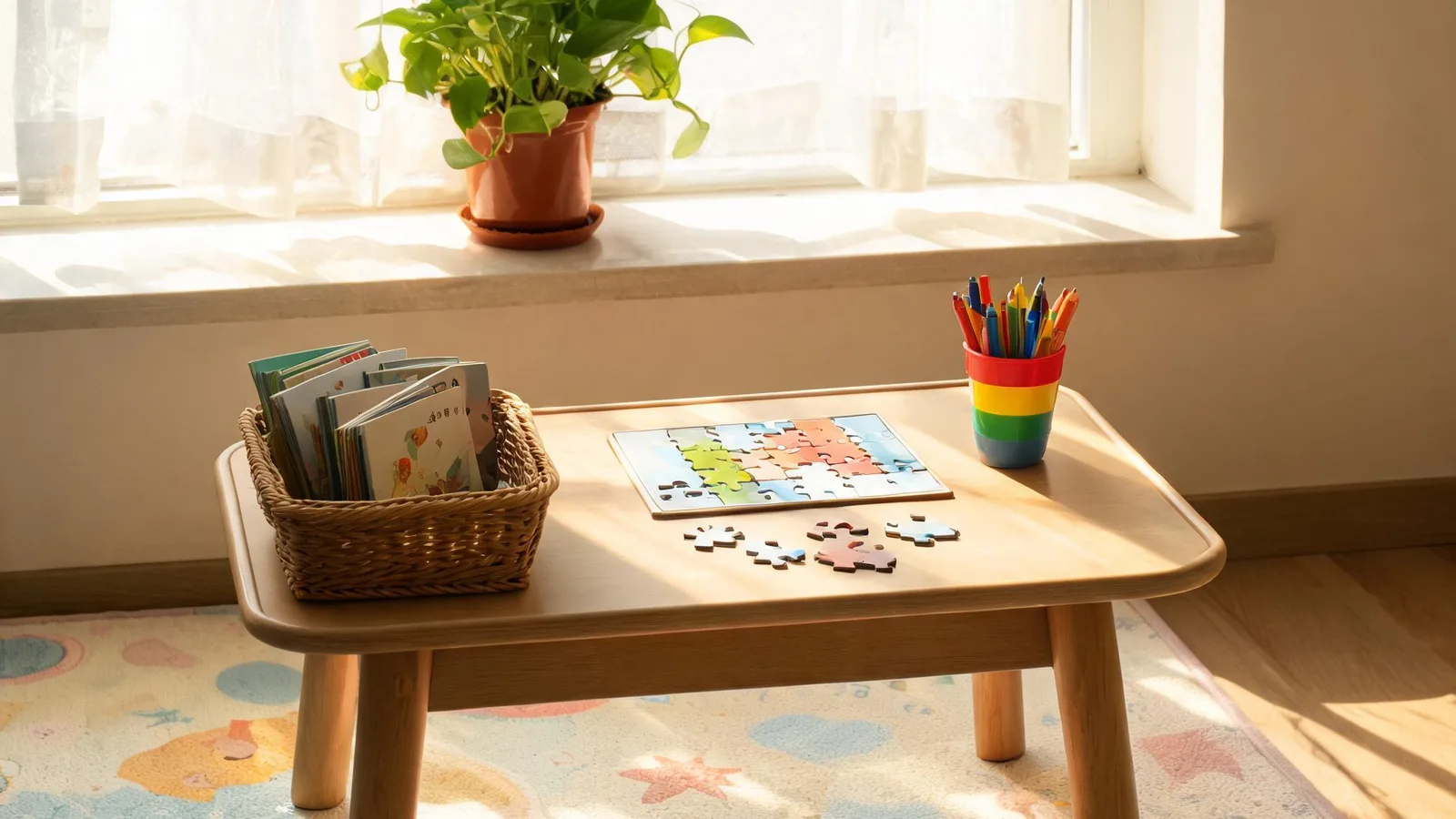
A preschool homeschool schedule is a short repeating morning: movement, a read-aloud, one short sit-down, then play. There is no national hour count for the whole day. For one activity, the CDC milestones for 5 years say most children by 5 years pay attention for 5 to 10 minutes during activities such as story time or making arts and crafts, and that line sets screen time apart. Treat 5 to 10 minutes as a planning clue for one sit-down, not as a required daily total. If your child is done sooner, stop. If they are still telling the story, stay a little longer and then move.
The hour question, after the morning order
Parents ask how many hours a day homeschool preschool should take, and the same question under other wording: how many hours a day a child should be homeschooled, how many hours per day the work should fill, how many hours a day should homeschool take, how many hours a day does it take to homeschool your child, and how many hours per day should I homeschool my child. The order in the first paragraph is the routine. The 5 to 10 minutes is the length of one activity, not the length of the day.
For the rest of the day, use the health pages, not a public-school day length. Children 3 to 5 need to be active throughout the day, according to the CDC physical activity overview. The same overview says children and adolescents 6 to 17 need at least 60 minutes every day. A preschooler is in the first band. A kindergarten-age child may cross into the second. Do not borrow a school-day length from an older grade and paste it onto a three-year-old.
NAEYC's developmentally appropriate practice principles say play is essential for all children, birth through age 8. A preschool homeschool schedule that protects play is following that position. A schedule that fills the morning with worksheets is arguing with it.
Change the order when the morning falls apart. If you are worried that a child is missing milestones, the CDC milestone pages say to talk with the child's doctor and to ask about developmental screening. That is their instruction, not a diagnosis from this article.
What state tables do and do not set
There is no single US hour count for a preschool homeschool schedule. Compulsory attendance ages differ by state. In the National Center for Education Statistics compulsory-attendance table (data year 2017, drawn from state statutes through the Education Commission of the States), Alabama is listed as 6 to 17, Alaska as 7 to 16, Arkansas as 5 to 18, Pennsylvania as 8 to 17, Washington as 8 to 18, and Texas as 6 to 19. A four-year-old at the kitchen table is often younger than the start age on that row. Exemptions, notice rules, and what counts as an equivalent program live in state law, and they change. The Education Commission of the States comparison puts the spread this way: depending on the state, students are required to attend school for as few as nine years and up to 13 years.
One state page shows how different the paperwork can be even when the age row looks simple. The Texas Education Agency home schooling page says home schooling has been a legal alternative to public schooling since 1994, and that parents who choose it are required to follow a course of study that includes good citizenship. Regulation, indexing, monitoring, approval, registration, and accreditation of those programs sit outside the agency's stated role on that page. That is Texas. This page is not legal advice. Open your state education department page and follow it.
A repeating order for the morning
Young children follow a sequence better than a clock. Write the order on a strip of paper, or just keep it in your head. A useful preschool order is:
- Bodies first. A walk, a dance in the kitchen, or time in the yard before anyone sits.
- A read-aloud on the couch, with the child turning pages or pointing.
- One short table job: a letter you name together, objects you count, a picture, or a cut-and-glue page if you are sitting right there.
- Free play you do not direct. Pretend cooking, blocks, dress-up, or a sink of water if you can see it.
- A shared job: matching socks, setting two cups, watering a plant.
- Food, rest, and an outing or the yard again if the day allows.
Keep the table job to one thing. A second worksheet is how a short morning becomes a fight. The CDC page for 4 years suggests limiting choices to 2 or 3, which is a practical way to offer the red cup or the blue cup instead of an open question. The same page suggests pretend play, outdoor games such as tag or follow the leader, and words such as first, second, and finally when you tell the order of the day. Those are things you can do inside the rhythm above. They are not a list of outcomes to check off.
Screen time is a schedule choice, not the lesson. The CDC milestone pages for 4 years and for 5 years both say to limit screen time to no more than 1 hour per day, and both say to keep screens out of the bedroom. The 4-year page is the one that says that hour should be a children's program with an adult present. The 4-year page also says children this age need 10 to 13 hours of sleep a day, including naps, and to avoid screens for 1 to 2 hours before bed. Protect the nap and the bedtime, and keep the tablet out of the homeschool block.
| Question | What a captured public page states |
|---|---|
| Must preschool at home last a set number of hours? | The NCES attendance table lists different start ages, including Alabama 6 to 17 and Pennsylvania 8 to 17. A preschool-at-home hour count is absent from that table. |
| How long is one sit-down activity? | CDC, by 5 years: attention for 5 to 10 minutes during activities such as story time or crafts. |
| What fills the rest of the day? | CDC: children 3 to 5 need to be active throughout the day. |
| Where does play fit? | NAEYC: play is essential for all children, birth through age 8. |
Three mornings or five
Can homeschool be 3 days a week? For a child who is not yet of compulsory age, a three-morning week is a family choice. Many grandparents and working parents can protect Monday, Wednesday, and Friday and let the other days be play, errands, and read-alouds at bedtime. A five-morning week helps if you like a shorter block each day and you are home anyway.
Once the child reaches the compulsory age on your state's row, the state may set days, hours, or subjects for the equivalent program. The NCES table and the ECS comparison show that those rules are not the same in Pennsylvania as in Texas. Read the current state page. Do not treat a three-day sample on a blog as a filing.
If you use three mornings, put the table job on those mornings and keep the read-aloud on the other days so books do not vanish. If you use five mornings, make two of them lighter: a book and a walk, no table. Light days are how a rhythm survives a sick week.
A four-year-old at the table
What is a good schedule for homeschooling a 4-year-old? Start from what you can do together, not from a classroom period length. A four-year-old morning that holds up looks like this in plain words:
- Outside or a dance before the table, because children 3 to 5 are supposed to be active throughout the day.
- One picture book you both like. Stop if the child leaves, and try again later.
- One table job tied to something in the room: the letter on the cereal box, three spoons to count, a circle you draw and they color.
- Pretend play you join for a few minutes and then leave. The CDC 4-year page lists pretending to be something else during play as something most children do by that age. Joining the pretend kitchen is the activity. Grading it is not.
- A choice of two or three, not a menu of ten. The digit pair on the CDC page is 2 or 3.
You do not need a different schedule for a three-year-old and a five-year-old so much as a different length for the table job. The three-year-old may only point at pictures. The five-year-old may want to try the sound. Same order. Shorter or longer sit.
Illustrative sample days
These times are an example for one family, not a requirement and not a record of a real child. Shift them by an hour if you sleep late.
A five-morning shape: wake, breakfast, and free play until everyone is dressed. Then a ten-minute yard time or a dance. Read one picture book. Sit for one page: trace a letter, count crackers, or color a shape. Stop. Free play while you start lunch. Nap or quiet rest. Afternoon is the park, the store, or blocks on the floor. Bedtime routine starts early enough for the sleep window on the CDC page. Total sit-down time in this picture is one short table job plus the book. That is the whole "school" block.
A three-morning shape: on Monday, Wednesday, and Friday, do the yard, the book, and the table job before lunch. On Tuesday and Thursday, read at breakfast and otherwise play. One afternoon a week, go to the library or a playground you do not visit every day. Write the three dates in a notebook if you like a record. The notebook is for you, not a score.
When the weeks are already chosen
You can run this preschool homeschool schedule with library books and things you already own. A printed year helps when you are tired of inventing Tuesday. When a blank week is the hard part, Home Preschool Year: Preschool, ages 3 to 5 includes a Start Here guide, a Year Map of all 36 weeks, 36 week files with Day 1 to Day 5 steps and an easier option each day, a print-and-gather list, and 7 activity pages, plus 180 numbered lessons, undated, and Progress Checklists for letters, numbers, shapes, colors and early skills. It is print-only PDFs, nothing is shipped, and an adult sits with the child and supervises scissors and small items. Progress Checklists record what you practiced, and they are not a test or a school-readiness result.
Open the week 1 sample if you want to see a week file before you buy. You still have a full routine if you never buy it.
For the next page after this one, a set of things to do on a given day is in preschool lesson plans. A wider look at materials for a home year is in home pre-k curriculum. Hands-on ideas around this age are in activities for four-year-olds. If you are also planning the year after preschool, the morning shape changes in kindergarten homeschool schedule.
What is a good routine for homeschool preschool?
Use the same order most mornings: movement, a read-aloud, one short sit-down, then play. Clock times can slide.
How many hours a day homeschool preschool?
No national daily-hour count exists. Repeat movement, a read-aloud, one short sit-down, then play. CDC, by 5 years: attention for 5 to 10 minutes during one activity, not a day total.
How many hours a day should a child be homeschooled?
It depends on age and on your state. Preschool at home is often a short morning. Compulsory attendance ages in the federal table differ by state.
Can homeschool be 3 days a week?
A three-morning week is a family choice for many children who are not yet of compulsory age. Once attendance rules apply, read your state page. This is not legal advice.
What is a good schedule for Homeschooling a 4-year-old?
One outdoor block, one picture book, and one short table job such as a letter, a count, or a picture. Stop the table job while it is still going well.
How many hours a day should I homeschool my child?
Match the block to the child in front of you. The CDC page for five-year-olds describes attention of 5 to 10 minutes during activities such as story time or crafts.