
How to teach the alphabet to preschoolers at home
Published 2026-10-23 · Updated 2026-10-23
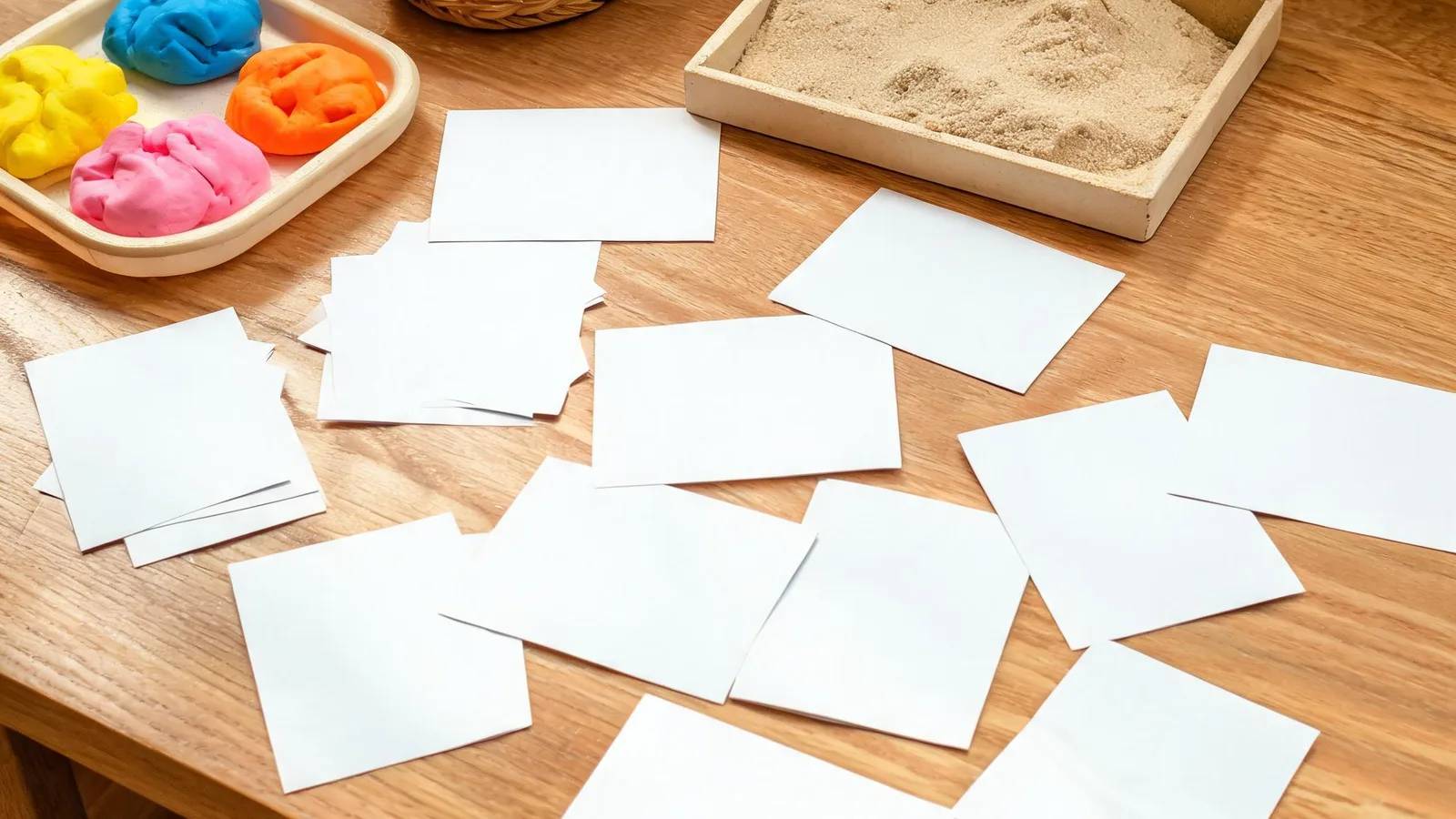
Teach the alphabet at home with games you can use in any order, with your help: your child names a letter you point to, plays a sound game, and traces a few letters. The name-letter game uses the letters in their own name. Games and cards you can make from paper are below. One optional sample afternoon uses naming, then a sound, then a short trace. That order is a sample, not a rule you have to follow.
These games use skills public preschool pages name. They are not a promise that a child will read. Illinois Early Learning lists emerging alphabet knowledge as recognizing and naming some uppercase and lowercase letters, especially those in the child's own name; matching some uppercase and lowercase letters with an adult's help; and beginning to form some letters, especially those in the child's own name, with an adult's help. The same page lists, with an adult's help, isolating the first sound in a word and showing that a letter can go with a sound. NICHD describes reading as built on how sounds form words and on the relationship between letters and sounds.
Letters in your child's own name
Write the child's first name in large letters on a strip of paper. Point to one letter, say its name, and ask them to point to the same letter. Do one or two letters, then stop. Illinois's benchmark is "some" letters, especially in the child's own name, not a race through the alphabet song.
A name hunt: walk to the fridge, a book, or a sign and look for that one letter. Say the name when you find it. Easier: you point, they say yes or no. This is an identifying game. More letter-finding play can wait until tomorrow.
Parents ask whether a three-year-old should already know the ABCs. The three-year CDC checklist includes drawing a circle when you show how, and stringing items such as large beads. Letter naming is on the five-year checklist, which includes "Names some letters when you point to them" and "Writes some letters in her name." The CDC says these milestones are things most children (75% or more) can do by a given age, and the lists are not a screening tool. A three-year-old can still play the name-letter point game. Missing a letter is not a score.
The four-year checklist includes holding a crayon or pencil between fingers and thumb, not in a fist, and naming a few colors. Use that grip when you trace. The four-year list is the color and crayon page; letter naming in the set of pages opened here is the five-year line.
For a five-year-old or a kindergartener, use the same games and add more letters from the name, plus a few letters from a book you are reading. Sound play for kindergarten sits in phonemic awareness activities. How a kindergarten week fits around letters is in how to homeschool kindergarten.
Make your own flashcards
You can make a small set tonight with paper, a pen, and scissors you control.
- Cut a paper rectangle about the size of your palm.
- On one side, write one uppercase letter. On the other side, or on a second card, write the lowercase letter.
- On a third card, draw a simple picture of something in your house that starts with that letter: a sock for S, a cup for C. Write the word under the picture in letters your child can see, even if they only look at the first one.
- Make cards only for the letters in the child's name first. Add more on another day.
- A cereal box or the back of a used envelope is enough paper. The set costs nothing if you already own a pen.
How to use the homemade cards:
- Show the uppercase card. Say the letter name. Ask your child to point to the lowercase card that matches. Illinois lists matching uppercase and lowercase with an adult's help.
- Lay three cards. Say one letter name. Your child taps that card. Easier: only two cards.
- Memory: two pairs face down, uppercase with lowercase. Turn two. Keep the pair if they are the same letter.
- I-spy in the room: "I spy something that starts with the letter on this card." You can answer if they shrug.
Cut cards are small. Pieces of toys are choking hazards, and the American Academy of Pediatrics says most children who die from choking are under age 5, so you cut, and you stay while the cards are on the floor (choking prevention).
A parent who wants cards already drawn, with a picture word under each picture, can use the printed set linked at the end. The paper set above is complete on its own.
Sound games
You can play these sound games with your help on their own, or on the same day as the name-letter game.
Sound games for one child:
- You say a word. They say, or you say together, the first sound. Illinois lists isolating the first sound in a word with an adult's help. Start with words they can see: sock, cup, mom.
- Offer two pictures you drew. Say a first sound. They point to the picture. Easier: you point and they repeat the sound.
- Rhyme play from the five-year CDC tips: "What rhymes with cat?" You can supply the rhyme. The five-year checklist also includes using or recognizing simple rhymes such as bat-cat and ball-tall.
- Read a picture book and stop on one letter you have practiced. Illinois points to children's books as a way to play with the sounds of language. Your child can tell the story from the pictures. The five-year tips include encouraging a child to "read" by looking at the pictures and telling the story.
NICHD ties letters to sounds as part of how reading works. A sound game is practice at that link. It is not a reading lesson and it does not mean your child is behind if they only want the picture.
Tracing with a crayon
Tracing is available with your help, for a few letters. You do not have to finish the naming game first. Illinois's line is to begin to form some letters, especially those in the child's own name, with an adult's help. The five-year CDC checklist includes writing some letters in the child's name. No opened checklist here gives an age when a child should trace every letter of the alphabet.
A tracing session:
- You write one letter from their name, large, on paper.
- They trace your letter with a finger.
- If they want a crayon, they trace again. The four-year checklist's crayon grip, fingers and thumb rather than a fist, is the hold to show. Easier: they watch you trace.
- Stop after two or three letters. A full worksheet of the alphabet is a lot of forming for a child who is still on "some letters in my name."
A three-year-old who is asked to write alphabet worksheets can do the finger trace on the first letter of their name, after you draw a circle together the way the three-year checklist describes. The worksheet can wait. Hand work that is not letters is in fine motor activities for preschool.
Parents who want a single path through the alphabet often hope for a shortcut. One optional sample is the name, then a sound, then a short trace. You can also play any one of those games on its own. Repeat on another day. Singing the alphabet song can sit beside the games as a song you enjoy. The song is not a test of which letters your child can point to.
An optional sample afternoon (illustrative)
This afternoon is an optional sample, labelled illustrative. The child's name and the minutes are invented. It shows one order you can use. It is not a rule.
Name on the strip: SAM.
First, point to S. Child points to S on the strip. You find S on a sock label. Next, show a sock picture and say the first sound. Child repeats it. Then, you write S. Child traces with a finger once. Last, put the cards in a book and stop.
If the child leaves after the sock hunt, stop. The sound game and the trace can wait for another day.
Printed letter cards, if you want them
The homemade cards are enough. If you want a full set already drawn, Alphabet Flashcards and Matching Games is for printing, cutting, and playing short letter matching, memory, and I-spy games with a 3 to 5 year old. It includes 26 uppercase and 26 lowercase letter cards, 26 picture cards with the word printed under each picture, and a How to Play guide with three games, each with an easier option. You cut the cards. Nothing is shipped. Small pieces mean an adult supervises play.
How do I make DIY alphabet flash cards?
Cut paper into cards. Write one uppercase letter and one lowercase letter. Draw a simple picture for a word that starts with that letter. Start with the letters in your child's name.
How can I create my own flashcards for free?
Use paper you already have, a pen, and a crayon. No purchase is required for the name-letter set described in the make-your-own section.
What are some fun games to practice the alphabet?
Hunt for one letter on a book cover, match an uppercase card to a lowercase card, and play a sound game with the first sound of a word you say.
How can I teach my child to trace the letters in the alphabet?
You write a letter from their name, they trace it with a finger, then with a crayon if they want. Stop after a few letters.
At what age should a child be able to trace letters?
Illinois describes forming some letters, especially in the child's own name, with an adult's help, as an emerging preschool skill. The CDC five-year checklist includes writing some letters in the child's name. Neither page sets an age for tracing every letter.
What are some activities to help children identify alphabet letters?
Point to a letter in their name on a card, then find that same letter on a sign or a book cover. Say the letter name while you point.