
Fine motor activities for preschool hands, plus indoor movement
Published 2026-10-16 · Updated 2026-10-16
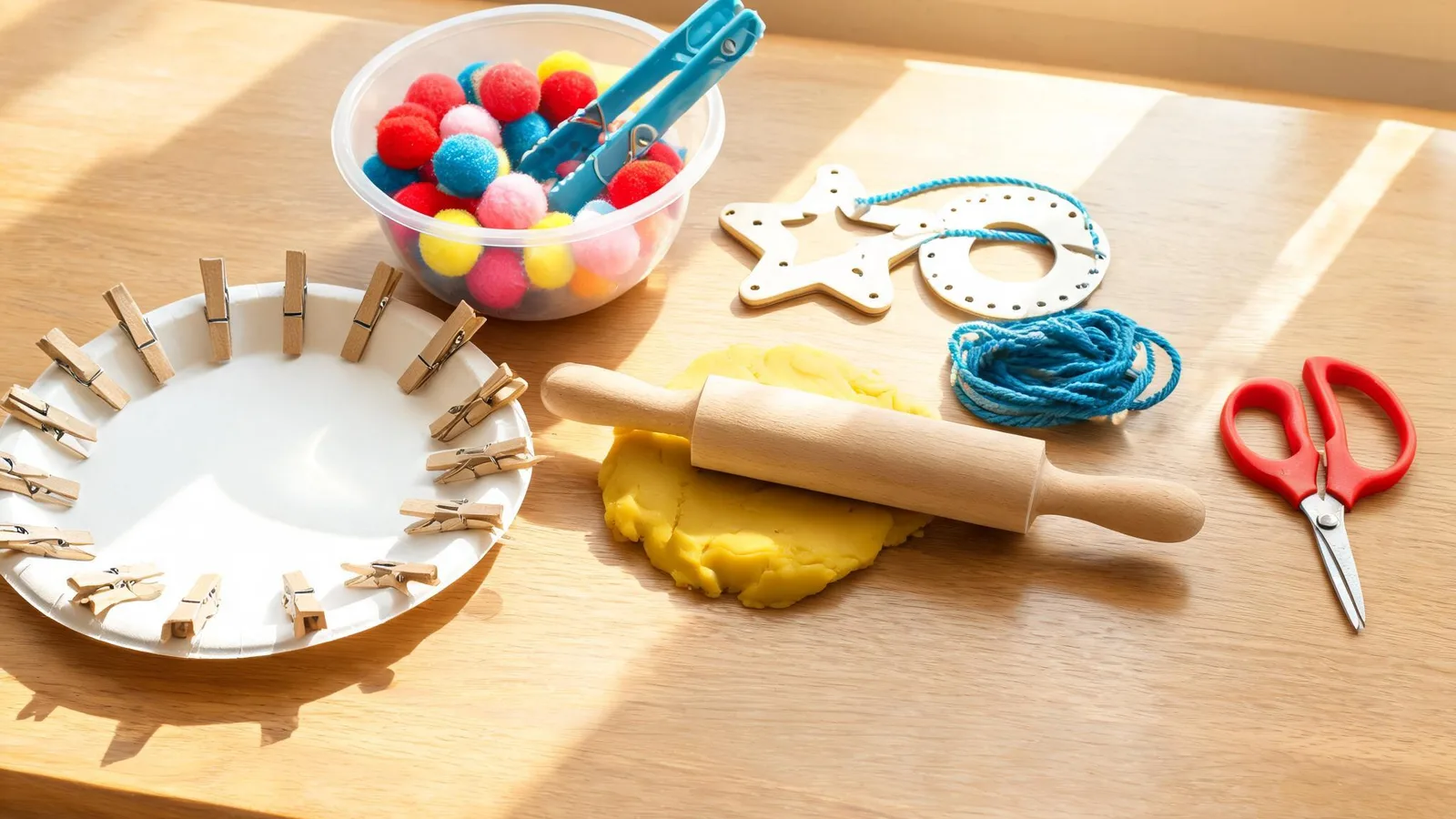
Fine motor activities for preschool at home can be sorted by what the hands do: pinch and tear scrap paper, snip a straw with child scissors while you hold it, trace a cookie cutter, and build a cereal-box tower with tape. The same afternoon can add indoor gross-motor movement when you cannot go out: a sock-ball catch, a cushion crawl, animal walks, and a tape line on the floor. Household scraps are enough. This is a setup list for one adult and one child, not a therapy plan.
Hand work by action
| Action | Try this | Your part |
|---|---|---|
| Pinch | Tear junk mail into a bowl | Set the bowl and sit nearby |
| Pinch | Press playdough into bits | Hand over a lump |
| Cut | Snip a drinking straw into bits | Hold the straw |
| Trace | Draw around a cookie cutter | Hold the cutter still |
| Build | Tape cereal boxes into a tower | Tear the tape and hand the next box |
One action is a full sitting. A child who is done after tearing paper has finished. You do not add a second job to fill a clock.
A CDC milestones page for four years lists holding a crayon or pencil between fingers and thumb, unbuttoning some buttons, and drawing a person with three or more body parts as things most children do by that age. That CDC list treats a milestone as something most children (75% or more) can do by the age on the page. Use that list as a picture of many four-year-olds, not as a test you score at the table. If a mark on it worries you, that page says to talk with the child's doctor.
Pinch, tear, and bead
Pinching is the smallest job and the one most kitchens can start in a minute.
Tear colorful junk mail, old envelopes, or a paper bag into a bowl. The child uses a thumb and finger, not a whole fist. When the bowl has a pile, they can glue a few bits onto a sheet, or stop. Playdough pressing is the same action in a lump: pinch off bits, roll them, press them flat with a blunt spoon.
A large-button shirt from the dress-up box is another pinch job. The child unbuttons a few buttons, then buttons one if they want. You hold the cloth. Stop before frustration. Unbuttoning some buttons is on that four-year CDC list as something many children do, not as homework.
Stringing pasta on a shoelace is a cousin of pinching. Tie a knot at one end so the pieces stay on.
The CPSC small parts page says children's products intended for use by children under 3 that present a choking, aspiration, or ingestion hazard because of small parts are banned hazardous substances.
Cutting and tracing at the table
Child scissors and a drinking straw are enough for a first cut. You hold the straw over a tray. The child snips. Short pieces fall in the tray, not on the floor. A paper strip with a thick line drawn on it is the next piece, if they ask. You still hold it.
Tracing is an optional activity on this page. Set a cookie cutter, a lid, or a block on the paper. The child draws around it while you keep the shape from sliding. A person drawing can be as simple as a circle and lines if they want to try the body-parts idea from the CDC list. You draw nothing over their marks.
Painting and collage ideas that use the same hands are in art and craft activities for preschool.
Building with boxes and tape
Building is fine motor plus a little planning. Save two or three cereal boxes. The child stacks them. You tear a short piece of tape and they press it on. A tower that leans is still a tower. Knocking it down can be the last step, if they want the tumble.
Bottle caps can be a road on the table for a toy car you already own. Pattern play with cut paper shapes is a different sitting; the kit note below is for the day you want those pieces printed.
Indoor movement when you cannot go out
Hand jobs use the fingers. Gross-motor play uses the whole body: catching, crawling, walking, hopping in place if the ceiling allows. The pages that rank for this search often split those two jobs. Here they share an afternoon, because a rainy day still needs both.
The American Academy of Pediatrics gives a daily recommendation of at least 60 minutes of physical activity for children 6 years and older, and says that time can be split into shorter blocks. For a younger child, that page points to active play rather than that minute figure. Do not treat 60 minutes as a preschool target. A short indoor burst is the kind of movement the younger-child note is pointing at.
Try these in a cleared living room:
- Sock-ball catch. Roll a pair of socks into a ball. Stand close. The CDC four-year list includes catching a large ball most of the time. A sock ball is the indoor stand-in, not a test of that mark.
- Cushion crawl. Couch cushions on the floor make a low tunnel.
- Animal walks. Bear crawl, frog jumps on the rug, flamingo stand for a breath. One animal, then a rest.
- Tape line. A strip of painter's tape on the floor is a road to walk, heel to toe if they want, or just beside the line.
- Basket toss. A laundry basket and the sock ball. Two tosses, then a drink of water.
Outdoor catching and running are a different page of the day. This section is for the hours you stay in. Games that add rules on top of movement are in games for preschoolers. Counting the tape-line steps can wait for preschool math activities if you want numbers in the mix later.
A rainy-day movement circuit, labelled illustrative
This circuit is illustrative, a sample order, not a plan you must finish.
Start with two sock-ball rolls from the couch to the rug. Crawl the cushion line once. Walk the tape road to the kitchen and back. Toss the sock ball into the basket twice. Sit and tear three scraps of paper into the bowl so the hands get a turn too. End with water and a story. If the child leaves the line to play with a truck, the circuit is over. Follow them.
Pieces you can print and cut
When the hand job you want is shape building rather than scraps, the Shapes and Patterns Cut-and-Play Kit is for print, cut and play shape-building and pattern games with a 3 to 5 year old. It has 10 shape cards, 3 build-a-picture mats with cut-out shape pieces, and pattern strips AB, AAB, ABB and ABC with cut-out tiles and an answer strip. It has a How to Play guide with 3 activities, each with an easier option. It is print-only, you cut the pieces, and an adult supervises play with small pieces.
A reader who never prints that kit still has the pinch, cut, trace, build, and indoor movement list above. One honest limit: these jobs are not a promise of stronger hands.
What are some examples of fine motor activities?
Tearing scrap paper, pinching playdough, snipping a straw while you hold it, tracing a cookie cutter, and taping a cereal-box tower.
What are fine motor activities?
Small hand and finger jobs you can do with household scraps at a table. This page sorts them by pinch, cut, trace, and build.
How to help preschoolers with fine motor skills?
The child pinches, tears, traces, and stamps. If a mark on that CDC list worries you, talk with the child's doctor.
What are gross motor activities for kids?
Whole-body play such as catching, crawling, and walking a line. Indoors, a sock ball and couch cushions stand in for the yard.
What are some fun indoor activities for developing gross motor skills?
Sock-ball catch, a cushion crawl, animal walks across the rug, and a tape line to follow.
What are gross motor skills in preschool?
Big movements: catching a large ball, crawling, walking a line, and moving like an animal. A short indoor burst counts as active play.