
Art and craft activities for preschool at the kitchen table
Published 2026-10-16 · Updated 2026-10-16
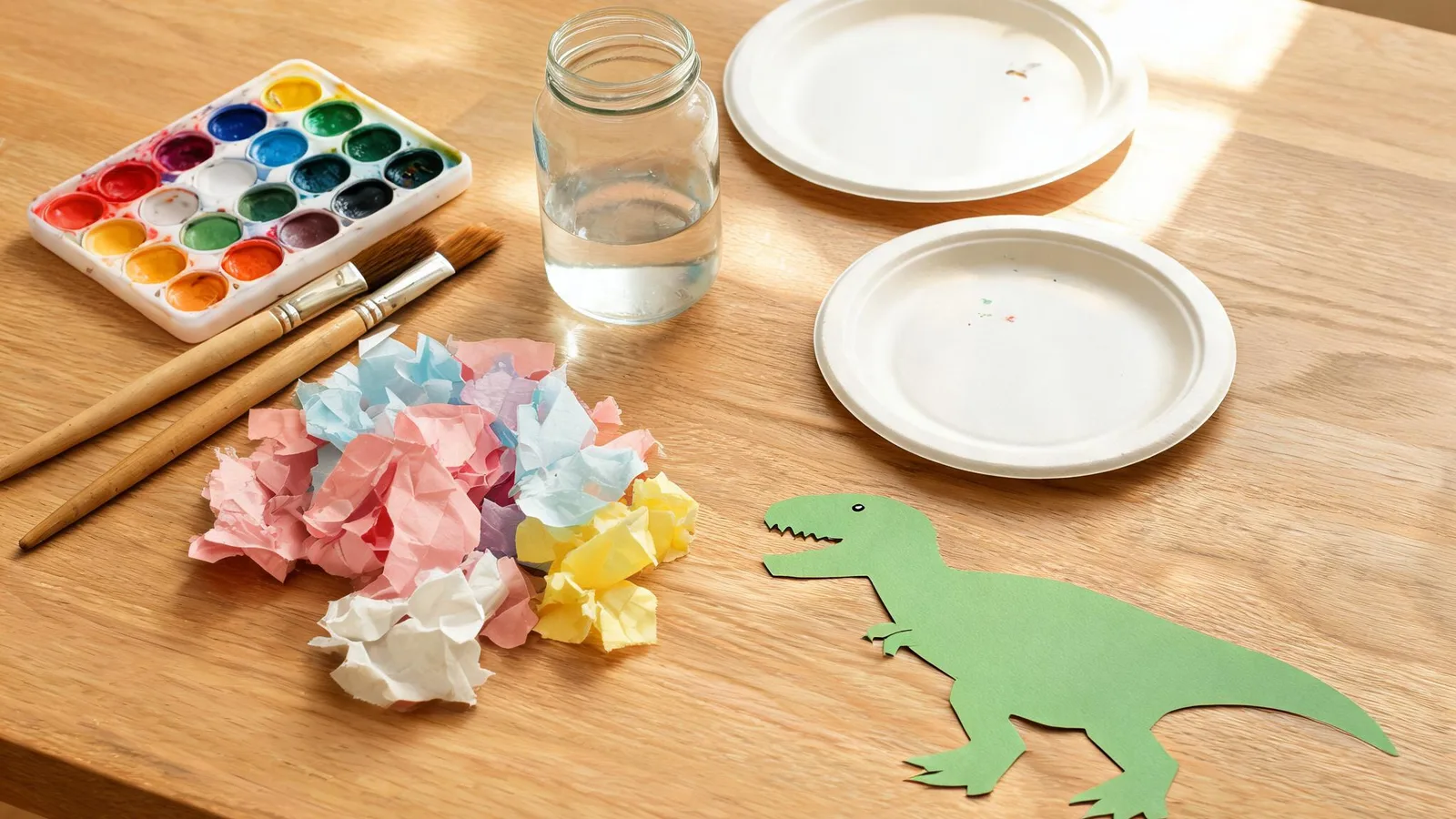
Art and craft activities for preschool at home split into two piles, and the help you give follows the pile. Open-ended art, where the child leads: crayon drawing on a big sheet, torn-paper collage, finger paint on a tray, and playdough pressing. Step-by-step crafts, where you do the fiddly part: tape-resist painting, a paper-plate animal, and a torn-paper dinosaur whose outline you draw. You stay for the sitting. The CPSC toy safety publication says proper supervision of children at play is how to protect children from toy-related injuries. Step back for tearing, scribbling, and stamping. Everything below is indoor, so a rainy afternoon and a waiting-room pad both fit.
A short list to start today
| Activity | Kind | Your part |
|---|---|---|
| Crayon drawing on a big sheet | Open-ended | Sit nearby and offer a second color |
| Torn-paper collage | Open-ended | Set paper and a glue stick, then step back |
| Finger paint on a tray | Open-ended | Set the tray and stay for the mess |
| Playdough pressing | Open-ended | Hand over a lump and a blunt tool |
| Tape-resist wash | Step-by-step | You lay the tape and peel it later |
| Paper-plate animal | Step-by-step | You cut, the child glues |
| Torn-paper dinosaur | Outline by you, fill by the child | You draw the outline |
Pick one row. A full afternoon of every row is more mess than one child needs. If you are the grandparent for the day, the same rows work: one child, one table, you stay for paint.
Open-ended art versus a step-by-step craft
Open-ended art has no finished picture in your head. You put out paper and a tool. The child decides the marks. A scribble that covers the page is a finished piece. A step-by-step craft has a shape you are aiming at, such as a plate that looks like a cat or a bag that looks like a dinosaur. Those need your hands for cutting and for starting the glue.
Both kinds belong in a home week. Open-ended art is the one to choose when you are tired, because the child can keep going while you wash a cup. A step-by-step craft is the one to choose when the child asks "what are we making?" and wants to see a creature at the end. Say which kind you are doing before you open the glue, so you are not correcting a scribble that was supposed to be free.
A CDC milestones page for four years lists drawing a person with three or more body parts, and holding a crayon or pencil between fingers and thumb rather than in a fist, as things most children do by that age. CDC describes these milestones as things most children (75% or more) can do by a certain age. That list is a picture of many four-year-olds, not a score for your child and not a reason to turn drawing into a drill. If a mark on that list worries you, the same page says to talk with the child's doctor.
A short session is enough. A CDC milestones page for five years lists paying attention for 5 to 10 minutes during activities such as story time or making arts and crafts. The same five-year CDC milestones page sets screen time aside from that crafts example. Plan a craft that can end when the interest ends. A half-finished collage can dry on the counter.
The Illinois Early Learning Project suggests memory drawings, observational drawings, and crayon rubbings when you are stuck waiting, and invites you to talk about line, texture, color, shape, value, and space in pictures you already see. A waiting-room pad is the same idea as the kitchen table, only smaller.
How much help to give
Use one split for who does the step. You start the glue, draw the outline, and put a tool away when that step is finished. The child tears, scribbles, stamps, and presses. You remain at the table for the craft, because the CPSC toy safety publication says proper supervision of children at play is how to protect children from toy-related injuries.
A three-year-old often needs you to start the glue stick, hold the paper still, and show a circle once. A CDC milestones page for three years lists drawing a circle when you show how, and stringing items such as large beads or macaroni, as things most children do by that age. Offer a fat crayon and a short string of large pasta if you want that kind of hand work. Stay beside a younger sibling for that stringing, which is the proper supervision of children at play the CPSC toy safety publication describes.
A four-year-old often wants to try child scissors on a straw or a paper strip. You hold the piece so it does not slip, then put the scissors away when the snipping stops. A five-year-old may want to add a detail you did not plan, such as a hat on the plate animal. Let that detail stay. The craft is for this afternoon, not for a display.
Help also means talking, not fixing. Ask what color they want next. Ask which scrap is the tail. If they say the scribble is a dog, write "dog" on the back in your handwriting and leave the marks alone.
Painting that stays on the table
Painting is the messiest row, so set it up before you open the pot.
- Cover the table with a paper bag or an old sheet you can throw away.
- Put one color in a shallow lid. A second color can wait until the first one is used.
- Offer a sponge, a cotton ball, or fingers if a brush is frustrating.
- For tape-resist, you press strips of painter's tape on the paper, the child paints over them, and you peel the tape when the paint is dry.
- For a bag painting, you put a spoon of paint into a zip bag, you seal it, and the child presses the bag so the paint stays in the bag. You stay for that paint, as the CPSC toy safety publication says proper supervision of children at play is how to protect children from toy-related injuries.
Wash hands before snack. Keep the paint lid closed between turns so a tip does not cover the chair. If the child wants to paint a dinosaur, they can paint the torn-paper one after the glue dries, with one color, while you hold the bag flat.
A paper-plate animal is the calmer cousin of painting. You cut ears or a beak. The child glues them and adds crayon spots. Name the animal whatever they say it is. A cat with six legs is still their cat.
A dinosaur craft from the scrap box
This dinosaur pair is a home craft from scraps. It is not a character from a show, and it is not a product you buy. You draw, you cut the sponge, and the child fills and stamps.
Torn-paper dinosaur. Take a paper grocery bag or a large sheet. Draw a side-view outline: an oval body, a long tail, four stubby legs, and a small head. The child tears green, brown, and yellow scrap paper into bits and glues them inside the line. You may add three paper triangles along the back if they ask for plates. Your help is high for the outline and for opening the glue, then low once the tearing starts. Stop when the outline is mostly covered. A few bare spots are fine.
Sponge footprint path. Cut a clean kitchen sponge into a rough three-toe shape with scissors you keep. Pour a thin layer of washable paint into a tray. The child presses the sponge and stamps a path along a strip of paper. Ask which print is bigger and which way the feet were walking. Your help is high for the cutting and for the paint pour. Stay until the tray is closed, because the CPSC toy safety publication says proper supervision of children at play is how to protect children from toy-related injuries.
If they want more dinosaur play after the glue dries, walk the sponge prints with a toy animal you already own, or look at a picture in a book from your shelf. Skip screens for this block. The five-year attention note above is about making arts and crafts, not about a video.
Hand work from tearing and snipping sits next to fine motor activities for preschool. Messy paint sits next to preschool sensory activities. A wider afternoon list is on preschool activities at home.
What to do with the finished pieces
The pile grows faster than the fridge. Use a small ritual so you are not throwing art away in secret.
- Choose one piece with the child for the fridge, a folder, or a box on a shelf.
- On the back, write their words, not a grade. "Spots" or "the tail" is enough.
- Date it in your own note if you like a record. The date is for you.
- Recycle the rest together. Crumpling a piece they have finished with is part of the afternoon, not a failure.
- A pair of memory drawings, yours and theirs, from the Illinois waiting-time idea, can be the piece you keep when you were out of the house.
A four-year-old's indoor craft afternoon can be one row from the table plus this ritual. A five-year-old may want to tell a two-part story about the dinosaur prints. Listen, write one sentence, and stop. You do not need a gallery wall.
A theme week when you want a plan
The scrap-box dinosaur is a one-off afternoon you make from paper and a sponge. It is not a planned theme week, and it is not sold as a dinosaur set. When you want other ready-planned themes, the Theme Unit Library: 12 preschool units adds a theme week through the year for a 3 to 5 year old, each unit planned day by day in the same format as the preschool year. These are the theme units: autumn and harvest, winter lights, spring and Valentine's Day friendship cards, summer and Fourth of July picnic, weather, plants and seeds, insects, birds, ocean, farm, five senses, feelings and friends. Each unit has a 5-day unit guide with easier options, a print-and-gather list, picture word cards, counting, letter tracing, sorting, a picture sequence, observe-and-draw, talk-about and a paper craft. It is print-only. Nothing is shipped. An adult supervises scissors and small items.
Those theme weeks are the planned cousins of this page: weather, plants, insects, farm, ocean, and the five senses, among others. None of that list is a dinosaur unit. A reader who buys nothing still has the full craft list above.
One honest limit: these ideas assume one adult at home with one child and ordinary scraps. They are not a classroom plan, and they are not a promise of a new skill.
More age-near ideas are in activities for three-year-olds and activities for four-year-olds.
What arts and crafts can I do with a 3 year old?
Tearing paper, crayon drawing on a big sheet, playdough pressing, and finger paint on a tray. You start the glue stick and stay, which is the proper supervision of children at play in the CPSC toy safety publication.
What are some fun painting activities for preschoolers?
One color on a tray, a sponge stamp, or tape you lay down before the child paints. Peel the tape yourself when the paint is dry.
What can I do with my children's art?
Keep one piece, write their words on the back, and recycle the rest together so the pile stays small.
What are some fun dinosaur activities for preschoolers?
Tear paper into a dinosaur outline you draw, or stamp a sponge footprint path. Both use scraps, and you do the cutting.
What are some examples of open-ended art activities for toddlers?
Large crayons, torn paper, and playdough pressing. Stay beside a younger sibling for the sitting, as the CPSC toy safety publication describes proper supervision of children at play.
What are some easy craft activities for kids?
A paper-plate animal you cut and the child glues, or a straw the child snips while you hold the piece still.