
Sensory activities preschool families can set up on one tray
Published 2026-10-16 · Updated 2026-10-16
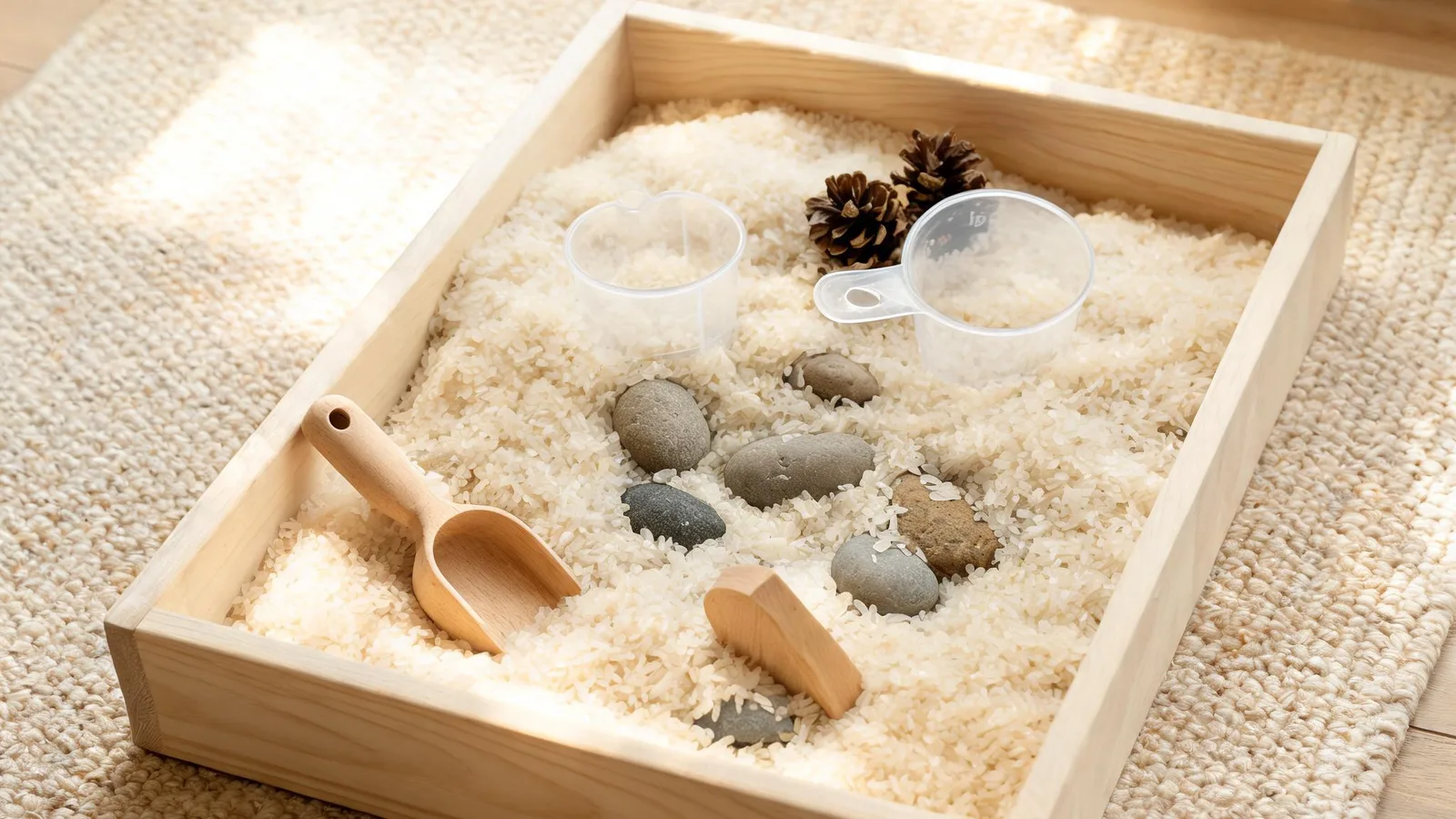
Sensory activities for a preschooler at home can be one tray and five senses: a dry-pasta touch bin, two cups of colored water to look at, a closed shaker to listen to, a spice jar to smell, and a snack sort to taste. Set out one sense at a time. You hold the bottles and the lids. Stop if your child pulls away. These five setups are this page's menu. These are play setups for ages three to five, not baby mouthing toys and not a therapy plan.
Five setups, one per sense
| Sense | On the tray | Your job |
|---|---|---|
| Touch | Dry pasta or rice in a shoebox lid, plus a cup and spoon | Keep the bin on the table |
| Sight | Two cups of water and a bottle of food coloring | You hold the bottle and add a drop |
| Sound | Two sealed containers, one with rice and one with cotton | You close the lids and stay |
| Smell | A cinnamon jar or a lemon peel | You hold the jar |
| Taste | A cracker and an apple slice you already planned to serve | Snack rules, not mystery powders |
That is the whole menu. A child who wants only the colored water has had a sensory sitting. You do not owe them all five senses before lunch.
Touch bins that stay preschool-sized
A shoebox lid or a baking sheet with a rim holds a handful of dry pasta or dry rice. Add a cup and a spoon. The child scoops, pours, and pinches. A lid is better than a deep bin, because a deep bin invites dumping on the floor.
A CDC milestones page for three years suggests letting a child play with playdough by squishing it, pressing it, pinching it, and making balls in different colors. That is a touch job you can swap in when you want less spill than rice. The same page lists stringing items such as large beads or macaroni as something most children do by three years. Large pasta on a shoelace with a knot can be the stringing version, on the table, with you beside the lace.
The three-year CDC page uses a milestone for something most children (75% or more) can do by that age. The stringing line is a picture of many three-year-olds, not a goal you have to hit today. From birth to 5 years, that CDC series is a checklist to notice, not a score you assign after a bin.
Keep dry rice and pasta as a hand bin. If the child wants to taste something, serve the snack you already planned, on a plate, away from the raw bin. Raw rice and raw pasta are not the taste activity.
Looking, listening, and smelling
Sight: two clear cups of water. You add one drop of food coloring to each, different colors if you have them. The child stirs with a spoon. They can name the color or just watch the swirl. A second drop is your call. Cap the bottle and put it up.
Sound: a small container with a few grains of rice, and a matching container with a cotton ball. You close the lids and stay while the child shakes, listens, and guesses which is the noisy one. Then you open them, show the insides, and put the rice back in the cupboard. That stay is what the CPSC toy safety publication describes as proper supervision of children at play.
Smell: cinnamon, a mint leaf, coffee, or lemon peel. You hold the jar under their nose for a short sniff, and you stay for that sniff, because the CPSC toy safety publication says proper supervision of children at play is how to protect children from toy-related injuries. Eyes can close if they like that. One jar is enough. Two jars are a game of "same or different" if they are still interested. Stop when they turn their head.
These three senses stay at the table. A science-style watch of ice, seeds, and bugs is a different sitting, written up in preschool science activities. Tearing and gluing the colored-water picture they might draw afterward belongs with art and craft activities for preschool.
A taste sort at snack time
Taste is the sense that should use food you already trust.
Set a cracker, a slice of apple, and a spoon of yogurt, or whatever three foods were already on the menu. Ask which one crunches and which one is soft. Ask which smell they noticed before the bite. That is the activity. It ends when the snack ends.
Do not offer unknown powders, craft paint, playdough, or the rice from the touch bin as something to taste. Those stay in their own jobs. If a child puts a pasta piece toward their mouth, you trade it for the snack plate and close the bin.
Supplies on one tray
Gather this before you invite the child over, so you are not hunting for a lid with wet hands.
- A rimmed lid or sheet pan
- A handful of dry pasta or rice
- A cup and a spoon
- Two clear cups and a food-coloring bottle you will hold
- Two small containers with lids you can close
- One spice or peel you already cook with
- The snack you were going to serve
- A towel for the table edge
Playdough can replace the pasta if you want a quieter touch job. Fat crayons can sit on the tray if they want to mark a color they saw. Hand tools for pinching and snipping are listed in fine motor activities for preschool.
Supervision while the bin is open
You stay in the room and you hold the bottles and the jars. For this tray, the CPSC toy safety publication is the note on staying nearby: proper supervision of children at play protects children from toy-related injuries. Open cups of water stay on the table with you there: CDC drowning prevention says to supervise closely and constantly when children are in or near water, including bathtubs. You close the bin before you answer the door.
Children's products meant for children under 3 are banned hazardous substances when small parts create a choking, aspiration, or ingestion hazard, according to the CPSC small parts page. A preschool touch bin is not a product sold for a baby. A younger child in the house still should not reach loose pasta, rice, or an open container. Put the tray in a cupboard when the sitting ends.
If your child hates a texture, stop that sense and offer a different row from the table. Pulling away is information, not a problem you have to push through. This page is not a promise of calmer play or stronger hands. It only describes the tray.
One messy afternoon, labelled illustrative
This afternoon is illustrative. It is one way the tray might go, not a script.
Start with colored water because it looks like a treat. Stir, name the color, cap the bottle. Move to the pasta lid for scooping while the cups sit out of elbow range. Shake the closed container twice. Sniff cinnamon. Eat the apple slice at the table and say whether it was crunchy. Wipe the lid. The bin is done even if rice is still in the cup.
A five senses week on paper
The tray above is yours to set with food from the kitchen. Five senses is one of the theme units in the Theme Unit Library: 12 preschool units, with feelings and friends, farm, ocean, and birds. It has a paper craft, picture word cards, talk-about, and a print-and-gather list. It is print-only, and an adult supervises scissors and small items.
That download is a planned paper week on the five senses and those other themes. It is not a bin of rice, and it is not a dinosaur set. A reader who buys nothing still has the tray list. One honest limit: one adult has to stay for the whole sitting, because loose pieces and open bottles are part of the setup.
What are examples of sensory play?
A dry-pasta bin to touch, colored water to look at, a closed shaker to hear, a spice jar to smell, and a snack sort to taste.
What are the benefits of sensory play?
NAEYC says children initially use their five senses to explore colors, textures, and sounds, and that engaging with basic materials encourages growth and learning in the moment and over time. That is a general note about open-ended materials, not a result this tray or the printable promises, and not a therapy or school-readiness guarantee.
What are five examples of sensory activities for preschoolers?
Pasta pinching, two cups of colored water, a rice shaker with a lid you close, a cinnamon sniff, and a crunchy-or-soft snack sort.
What are some fun 5 senses activities?
Use the five setups on this page, one sense at a sitting. You hold the bottles and the lids, and you stay, because the CPSC toy safety publication says proper supervision of children at play is how to protect children from toy-related injuries.
What are the benefits of sensory activities for preschoolers?
For a preschooler, the same NAEYC open-ended materials note is the careful answer: exploration of colors, textures, and sounds comes first, then more intentional use of the materials. This page does not turn that description into a guaranteed skill or a school-readiness outcome.
What are some good sensory activities for kids?
Preschool-sized versions of touch, sight, sound, smell, and taste, with supplies you already cook or craft with.