
Preschool science activities you can do with household scraps
Published 2026-10-16 · Updated 2026-10-16
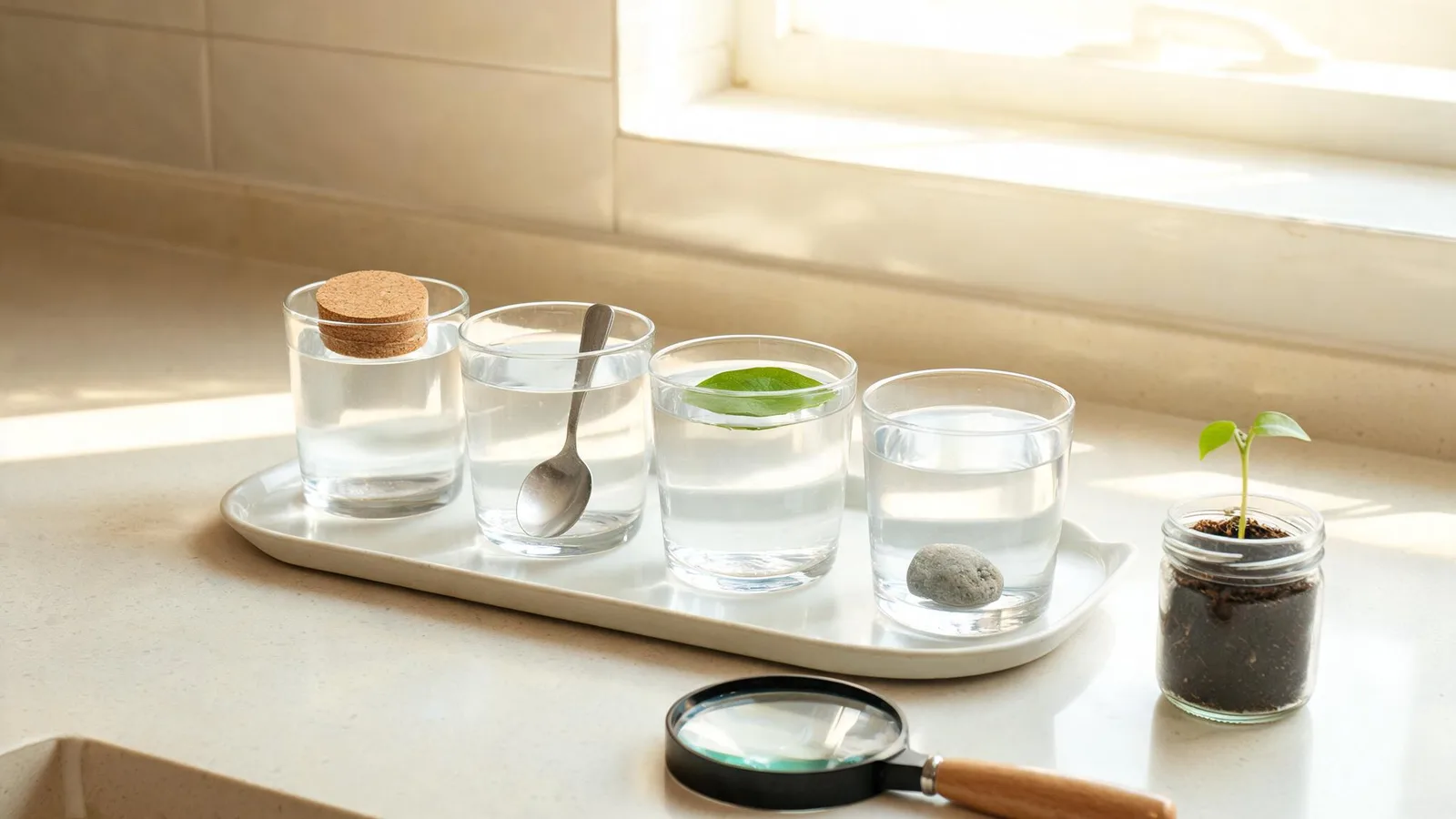
Preschool science activities at home can be four short watches, all from the kitchen: weather at the window, a seed on a wet paper towel, an insect you look at and draw, and a sense test with a spice jar or two spoons. Each one uses a cup, tape, or a crayon you already have. You stay beside anything that could spill, which is what the CPSC toy safety publication means by proper supervision of children at play. You look at insects. You do not collect them. A reader who wants a messier tray of the same senses can use preschool sensory activities after this list.
Weather you can watch from the window
Weather science is noticing, not a forecast you have to get right.
Tape a short ribbon, a strip of scrap paper, or a plastic bag scrap to the outside of a window if you can reach it, or to a chair leg on a porch while you stand there. The child watches which way it moves. Name the day in plain words: still, breezy, wet. Bring the ribbon in when you are done so it does not become litter.
Set two plates. Put an ice cube on each. One plate goes in a sunny spot, one in shade, both where the child can see them. Ask which cube they think will shrink first. Look again after a story. You throw the melt water in the sink.
A cup of water on the counter is the slow cousin. Mark the level with a piece of tape. Look tomorrow. The water line may sit lower. Talk about what you both see. You do not need the word evaporation unless the child asks, and then a short answer is enough: some of the water went into the air.
A CDC milestones page for four years lists answering simple questions, such as what a coat is for or what a crayon is for, as something most children do by that age. "What do you think the ice will do?" is that kind of question. It is a conversation, not a quiz with a score.
Plants from a wet paper towel
A lentil, a dry bean, or a pea from the cupboard can be the plant watch.
- Wet a paper towel and fold it into a clear cup or a zip bag you seal.
- Tuck one or two seeds where the child can see them against the side.
- Set the cup in daylight, not on a hot vent.
- Look once a day. Add a spoon of water if the towel dries out.
- Draw what you see on a scrap, or just talk about a root, a shoot, or no change yet.
Some seeds do nothing. That is still a watch. Start a second seed if the child wants another try. When a sprout is long enough to move, you can tuck it into a pot of soil if you have one, or end the watch and compost the towel.
Leaf rubbing is the outdoor minute that goes with this. On a walk, pick one fallen leaf. At home, the child lays it under thin paper and rubs a peeled crayon over it. You hold the leaf so it stays put. Drawing the leaf is the same job as drawing a bug: look, then mark. More mark-making is in art and craft activities for preschool.
Insects you look at, not catch
Stand on a sidewalk, a step, or a window and look. A ant trail, a moth on the screen, or a picture in a book you own all count. The child says what they notice: legs, wings, color, where it went. You can draw a circle and let them add lines for legs. Counting legs on the drawing is optional and can stop at "many."
You do not catch the insect or bring it inside. A jar is for the seed watch, not for trapping a bug. The look ends when you go back in.
If the child wants a longer insect story, read a book you already have and ask what is happening in one picture. That question matches the kind of book talk on the CDC pages, and it stays a conversation.
Sense tests with kitchen jars
Senses are science when you notice a difference and say it.
Smell: two jars you already cook with, such as cinnamon and a strip of lemon peel, or coffee and a mint leaf. You hold the jar. The child sniffs. They can close their eyes if they want. Stop if they pull away. Only foods and spices you already keep. Unknown powders stay in the cupboard.
Touch: a spoon that sat in warm tap water, and a spoon that sat in cool tap water. The AAP burn-prevention page says to protect your child from tap water scalds, so you prepare both spoons and the child touches only the handles.
Sound: two closed containers, one with a few pieces of dry pasta, one with a cotton ball. You close the lids and stay while the child shakes them and says which is louder. Put the containers away when the game ends so a younger child does not have the pasta in reach. The CPSC toy safety publication says the law bans small parts in toys intended for children under three.
Taste belongs at snack, not in a mystery cup. A cracker and an apple slice you were going to serve anyway can be the taste note: crunchy and soft. A wider tray of sense play is on the sensory page linked above.
Safety notes before you start
Keep the watches small and stay in the room.
The CPSC toy safety publication says the law bans small parts in toys intended for children under three, and that plastic wrappings on toys should be discarded. A seed, a pasta piece, and a bag scrap are not toys sold for a baby, and a younger child in the house still should not have them in reach. Throw bag scraps and tape bits in the bin before you sit down to draw. You stay for the watches, because the CPSC toy safety publication says proper supervision of children at play is how to protect children from toy-related injuries.
A CDC milestones page for five years lists paying attention for 5 to 10 minutes during activities, for example during story time or making arts and crafts. That five-year CDC list sets screen time aside from the crafts example. On the five-year CDC page, a milestone is something most children (75% or more) can do by a given age. A five-minute window watch fits that kind of short attention. It is not a lab period you must fill, and the 75% line means the list is not a pass-fail for your child.
A short science afternoon, labelled illustrative
This order is illustrative. Change it if the child latches onto one watch.
Look out the window and name the wind with the ribbon. Set the two ice plates. Start the paper-towel seed while the ice melts. Draw the ice or the seed. Sniff one spice jar. End with the snack you already planned and one sentence about what you saw. If they only want the ice, the seed can wait until tomorrow.
A planned theme week for weather and living things
The watches above are free to run from the kitchen. When you want those topics already laid out as theme weeks, weather, plants and seeds, insects, birds, ocean, farm, and five senses are theme units in the Theme Unit Library: 12 preschool units. It also has a 5-day unit guide with easier options, a print-and-gather list, picture word cards, and observe-and-draw. It is a print-only PDF. It is for use by one family.
Those units are other ready-planned themes in the same daily shape, not a dinosaur set and not a lab kit. A reader who buys nothing still has the four watches on this page. One honest limit: the advice is for one adult at home with ordinary food-safe scraps, and it is not a promise that a science word will stick.
What are some fun science activities for kids?
A window wind watch, an ice cube in sun and shade, a seed on a wet paper towel, a bug you draw, and a spice-jar sniff.
What science is taught in preschool?
Looking and noticing: weather, plants, insects, and the senses. At home that can be one short watch, not a lesson period.
How to teach a 4 year old science?
Set one household watch and ask what they notice. You are not giving a lecture. A worry about how your child talks or moves belongs with the child's doctor, not with a kitchen watch.
What are some fun and easy 5-minute science experiments for kids?
Mark a cup of water, look at a cloud, or sniff one spice. A short look is enough. The five-year CDC list names 5 to 10 minutes of attention during activities, and a kitchen watch can be that short.
What are some cool easy science experiments?
Ice in two spots, a lentil on a damp towel in a clear cup, and a warm spoon next to a cool spoon. You stay for anything that spills, which is the proper supervision of children at play the CPSC toy safety publication describes.